Witness the Great Migration
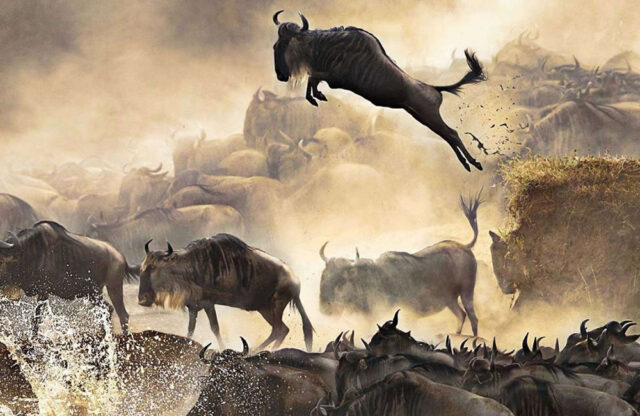
The Great Migration is one of the most spectacular wildlife events in the world, taking place every year in East Africa, primarily across Tanzania and Kenya. Millions of wildebeest, zebras, and gazelles move in a continuous search for fresh grass and water, creating a breathtaking natural spectacle. This massive movement of animals is driven by the rain patterns and seasonal changes, making the timing and location of sightings crucial for travelers. The great migration passes through famous wildlife areas such as the Serengeti National Park in Tanzania and the Masai Mara National Reserve in Kenya, where dramatic river crossings and predator-prey interactions can be witnessed. Tourists from around the world come to see newborn wildebeest calves, watch herds battling rivers, and experience the raw beauty of African landscapes. Understanding when and where the migration occurs helps travelers plan the best time to witness this awe-inspiring journey and enjoy one of nature’s greatest wildlife shows.
What is the Great Migration? The Great Migration is a circular movement of animals that happens every year in East Africa. The main animals involved are:
- Wildebeest – about 1.5 million take part
- Zebra – about 200,000
- Thomson’s gazelle – around 300,000
Other animals, like elephants, giraffes, and lions, also follow the migration. Lions, hyenas, and crocodiles wait along the way because they hunt some of these animals. The migration is driven by rain and food. Animals move to find fresh grass for grazing. When the grass dries in one area, they move to another area. This movement is cyclical, meaning it happens in a circle every year. The migration mostly happens in Tanzania and Kenya, across famous national parks like the Serengeti in Tanzania and the Masai Mara in Kenya.
Why the Great Migration is Famous?
- Massive Numbers of Animals
One of the main reasons the Great Migration is famous is the sheer number of animals involved. Over 1.5 million wildebeest take part in the migration, along with 200,000 zebras and 300,000 gazelles. These animals form giant moving herds that cover hundreds of kilometres across the plains. Seeing a million animals moving together is unlike anything else in the world. From a distance, it looks like a river of animals flowing across the land. This massive movement is mesmerizing and often described as a living, breathing natural phenomenon.
- Predator-Prey Drama
Another reason the migration is famous is the predator-prey drama. Lions, cheetahs, leopards, hyenas, and crocodiles follow the herds to hunt. Young wildebeest calves are especially vulnerable, and predators often target them. Tourists can witness chases, attacks, and escapes, giving them a real-life experience of survival in the wild. This constant drama makes every safari exciting and unpredictable.
- Dramatic River Crossings
The migration is also famous for its dramatic river crossings. Wildebeest and zebras often need to cross rivers like the Mara River in Kenya or the Grumeti River in Tanzania. These rivers have strong currents, and crocodiles wait for animals to cross. Watching thousands of animals leap into the water, struggle against the flow, and make it safely to the other side is thrilling and unforgettable. River crossings are one of the most photographed moments of the migration.
- Calving Season
The calving season makes the migration even more famous. From January to March, thousands of wildebeest calves are born in the southern Serengeti. This attracts predators and creates scenes full of life and danger. Tourists can witness the miracle of birth and the challenges newborn calves face. The calving season is also important because it sets the migration in motion, as herds begin moving north in search of fresh grass.
- Beautiful Landscapes
The Great Migration passes through stunning landscapes, which adds to its fame. The herds move across grasslands, forests, rivers, and rocky hills. The Serengeti has vast plains dotted with kopjes (rocky hills), while the Masai Mara has river valleys and rolling hills. These landscapes create breathtaking scenery for wildlife viewing and photography, making the migration not just about animals but also about the natural beauty of East Africa.
- Unpredictable Movements
The migration is famous because it is unpredictable yet predictable. Experts know the general route, but the exact timing depends on rain and fresh grass. This means that no two safaris are the same. One day the animals may be grazing peacefully, and the next day they could be crossing a river or running from predators. This unpredictability makes the experience exciting for every visitor.
- Global Tourist Attraction
The wildebeest migration is also famous as a major tourist attraction. Thousands of people travel to Tanzania and Kenya every year to witness it. Safari lodges, tented camps, and guided tours are often fully booked months in advance. The migration has helped put the Serengeti and Masai Mara on the map as top wildlife destinations. Tourists come not only to see the animals but also to experience wild Africa at its best.
- Photography and Filmmaking
Another reason the migration is famous is because it inspires photographers and filmmakers. Documentaries like “Planet Earth II” have shown millions of people the drama and beauty of the migration. Massive herds, river crossings, and predator-prey interactions provide stunning visuals. Many photographers travel thousands of miles to capture these moments, helping spread the fame of the migration worldwide.
- Unique, Once-in-a-Lifetime Experience
Finally, the Great Migration is famous because it is unique and once-in-a-lifetime. There is no other event in the world where millions of animals move in a circle, face predators, cross rivers, and follow a yearly cycle. Witnessing even part of the migration is unforgettable. It combines wildlife, landscapes, drama, and natural wonder, making it one of the world’s greatest natural spectacles.
Where Does the Great Migration Happen?
The Great Migration moves through Tanzania and Kenya. The main areas are:
- Serengeti National Park, Tanzania
- The Serengeti is the heart of the migration.
- Most of the wildebeest calves are born here between January and March.
- The Serengeti is huge, covering about 14,750 km² (5,700 square miles).
- It has grasslands, riverine forests, and kopjes (rocky hills) that are perfect for wildlife.
The Serengeti has several key zones:
- Southern Serengeti (Ndutu and Seronera) – Where the migration begins after the calving season.
- Western Serengeti (Grumeti and Ikoma) – Animals move here when the grass in the south is finished.
- Northern Serengeti (Lamai and Mara Triangle) – The wildebeest move north before crossing into Kenya.
- Masai Mara National Reserve, Kenya
- The Masai Mara is the northern extension of the Serengeti in Kenya.
- The animals usually arrive here between July and October.
- The Mara River is famous for dangerous river crossings where crocodiles hunt.
- The Masai Mara is smaller than the Serengeti, about 1,510 km² (583 square miles), but it is very rich in wildlife.
When to see the Great Migration
The migration follows the rains. Animals move from one area to another depending on where the grass is green. This is called a seasonal pattern. Here is the month-by-month guide:
- January – March: Southern Serengeti (Tanzania)
- This is calving season, when wildebeest give birth to thousands of calves.
- Location: Ndutu and southern Serengeti
- Why go: You can see newborn wildebeest and predators hunting weak calves.
- Note: This is also the green season, so the landscape is lush and beautiful, but it might rain occasionally.
- April – May: Western Corridor (Tanzania)
- The animals start moving westwards toward the Grumeti River.
- This happens after the short rains, as grass in the south dries.
- Why go: You can see predators hunting near the Grumeti River and smaller crowds than the south.
- Note: This is the long rainy season, so some roads may be muddy.
- June – July: Northwest Serengeti and Mara River (Tanzania/Kenya)
- Animals move north towards the Mara River and cross into the Masai Mara.
- Why go: This is when the most famous river crossings happen. Crocodiles lie in wait, and wildebeest face dangerous rapids.
- Best for: Dramatic photography and wildlife action.
- August – October: Masai Mara (Kenya)
- Wildebeest are now in the Masai Mara, grazing on fresh grass.
- Why go: The migration is densest here, and it is easier to find animals.
- Note: This is the dry season, making wildlife easier to spot because animals gather near water sources.
- November – December: Return to Serengeti (Tanzania)
- Animals begin moving south again after the short rains in the south.
- Why go: You can see the migration returning, less crowded than peak season.
- Note: Early December is green season, so some areas are wet.
Tips for Seeing the Great Migration
- Choose the Right Time
The first tip is to choose the best time to visit. The migration moves in a circle throughout the year, and the best place to see it depends on the season. For example, the southern Serengeti is best from January to March for calving, while the Masai Mara is ideal from July to October for river crossings. Planning your trip according to the season ensures you see the migration at its most active and exciting stages.
- Select the Best Locations
Another tip is to choose the right parks and reserves. The migration passes through several key areas: southern Serengeti, western Serengeti, northern Serengeti, and the Masai Mara. Each location offers different experiences, such as predator hunts, calving, or river crossings. By selecting the right location for your interests, you can see the wildlife events you most want to witness.
- Consider Guided Safaris
A third tip is to consider guided safaris. Experienced guides know where the herds are moving, the best viewpoints, and how to safely approach wildlife. They can also provide information about predator behaviour and local landscapes. Guided safaris are especially useful if you are unfamiliar with the parks or if you want to maximize your chances of seeing dramatic events like river crossings or calving.
- Decide Between Self-Drive or Safari Tours
Another important tip is to decide whether to self-drive or join a safari tour. Self-driving gives flexibility to explore at your own pace, but it requires a strong 4×4 vehicle and some knowledge of African roads. Safari tours provide convenience, local expertise, and access to guides who know the best spots. Choosing the right option depends on your comfort level, experience, and budget.
- Choose Accommodation Carefully
Accommodation is also an important tip. Staying close to key migration areas such as Ndutu, Grumeti, or the Mara River allows early morning drives and easy access to the herds. Options include lodges, tented camps, or luxury safari camps. Booking early is important during peak migration season because these accommodations fill up quickly. Staying near wildlife hotspots maximizes your chance of witnessing the migration’s main events.
- Pack Properly
Packing the right items is another key tip. Bring comfortable clothes, sun protection, binoculars, a camera, water, and snacks. Early mornings and late evenings can be cold, so warm layers are necessary. Comfortable walking shoes are useful for short bush walks. Proper packing ensures you are prepared for different weather conditions and long hours on safari.
- Be Safe Around Wildlife
Finally, always prioritize safety. The migration involves wild animals that can be dangerous. Never approach animals too closely or try to feed them. Follow all instructions from guides and park rangers. Staying safe allows you to enjoy the migration without putting yourself or the animals at risk.
In conclusion, the Great Migration is a spectacular wildlife event that can be witnessed across Tanzania and Kenya. The best time and place to see it depend on the season: southern Serengeti for calving in January–March, western Serengeti for predator action in April–May, northern Serengeti and Mara River for dramatic river crossings in June–July, and Masai Mara for grazing and crossings in July–October. By planning your visit according to these timings and locations, you can experience millions of animals moving across stunning landscapes, predator hunts, and the unforgettable drama of nature at its finest.